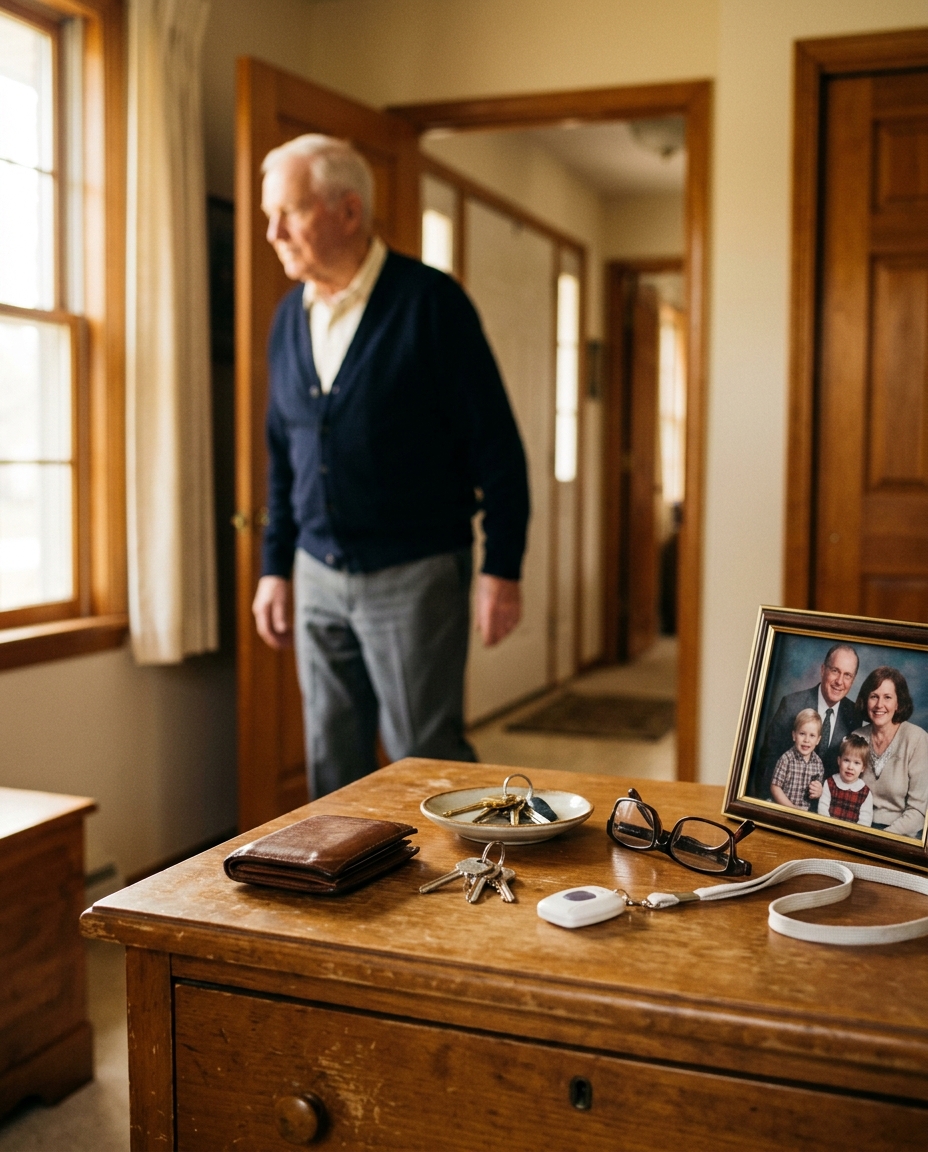
My dad refused to wear it. He said it made him feel like a dog. He was 78 years old, sharp as ever, and his daughter had just bought him a medical alert pendant because she was worried.
The pendant came in a small white box with a lanyard. The instructions were simple. Wear it around your neck. Press the button if you fall. Wear it in the shower. Wear it to bed. Wear it always.
He wore it for two days. Then it went on the dresser, next to his wallet and his keys. That is where it stayed for the next three years.
This is not unusual
I have heard this story dozens of times. The pendant in the drawer. The smartwatch on the charger. The fall detector still in its box. The expensive monitoring service that nobody activated.
Adult children buy these things out of love. They want to help. They want a way to know their parents are okay. And the technology exists, it is reasonably priced, and the marketing is everywhere.
But the people we are buying it for will not wear it.
Why they will not wear it
I asked my dad. He gave me three reasons, and I have heard versions of all three from every senior I have spoken to since.
One. It is uncomfortable. The lanyard catches on things. The pendant is heavy. It bangs against his chest when he walks.
Two. It is embarrassing. He did not want to wear it when his friends came over. He did not want to wear it to church. He did not want to wear it at all in public.
Three. It made him feel old. Every time he looked down, he saw a reminder that someone thought he might fall. He did not need that reminder. He had not fallen. He was fine.
“I am not going to wear something that tells me every minute of every day that I am about to die.”
The dog collar line
What he said to me, exactly, was this. It is a dog collar. You put it on the dog so you can find him when he runs off. I am not your dog.
He was not angry. He was just clear. He was a person, not a problem to be solved. He was not going to wear a device that treated him like a liability.
That is the line that has stayed with me ever since. We have spent the last several years building DAR.WIN, and every design decision has been made against that line.
What we built instead
DAR.WIN does not ask the senior to wear anything. It does not ask them to do anything. The technology is in the smart plugs. The smart plugs are in the house. The house tells the family what is happening.
The senior does not have to remember to charge anything. They do not have to remember to put anything on. They do not have to push any buttons. They do not have to do anything different than what they were already doing.
That is the only design that will actually be in use a year from now. Everything else ends up on the dresser.
The technology that works is the technology that asks for nothing. My dad never wore the pendant. He would not have to wear DAR.WIN either. That is the whole point.